
You’re getting ready for a ride. The weather is a little cold, so you close your helmet visor. A few seconds later, a cloudy patch appears right in front of your eyes.
You lift the visor, let some air in, and the fog disappears. But as soon as you close it again, the problem comes back.
It’s annoying, especially when you’re stopped at traffic lights or riding on a cold morning. More importantly, a foggy visor can make it difficult to see the road.
If you’re wondering how to keep your motorcycle helmet from fogging up, start with the airflow inside your helmet. A suitable anti-fog insert, a breath guard, or better ventilation may also help.
Here’s how to stop a motorcycle helmet visor from fogging up, what to avoid, and what to do if your view becomes cloudy while riding.
Why Does a Motorcycle Helmet Visor Fog Up?
Your breath carries moisture. When that warm, moist air touches a cooler visor, tiny drops of water can form on its surface.
Those drops create the misty layer that makes the visor difficult to see through.
It’s the same thing that happens when a bathroom mirror fogs up after a hot shower.
Helmet visor fogging is more likely when:
- You’re riding in cold weather.
- It’s raining or the air is very humid.
- You’re sitting in traffic with little air moving through the helmet.
- The helmet’s vents are closed.
- Warm breath keeps reaching the inside of the visor.
A full-face helmet can make this more noticeable because it covers your mouth and nose. Your breath stays inside unless there’s enough airflow to carry the moisture away.
The good news is that you may not need a new helmet. Often, the first step is to check how your current helmet handles airflow.
7 Ways to Stop a Motorcycle Helmet Visor From Fogging Up
1. Open the Helmet’s Air Vents
This is the simplest place to start.
Many full-face helmets have a vent around the chin area and one or more vents near the top. Some also have exhaust openings toward the back.
These openings help air move through the helmet.
When the visor starts fogging, check whether the chin vent is closed. Opening it can help move moist air away from the visor.
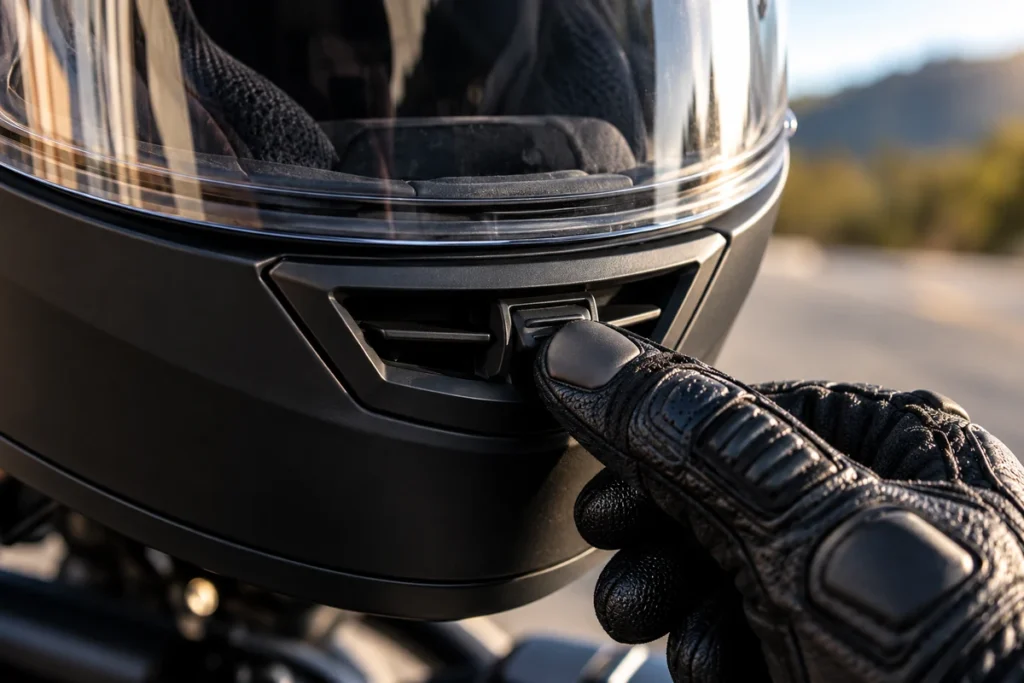
For example, if you normally close every vent on a cold morning, try keeping the chin vent open when conditions allow.
You might notice less mist building up around the lower part of the visor.
However, ventilation works differently from one helmet to another. Some designs direct air toward the visor, while others mainly move air around your head.
Check your helmet’s manual to see which vent is intended to help with visor fogging.
Remember: A vent won’t solve every fogging problem, especially in very cold or wet weather. It is still worth checking before buying anything.
2. Use the Visor’s Vent Position, If Your Helmet Has One
Some helmets have a visor mechanism that allows a small opening for extra airflow.
This can be helpful when you’re stopped or moving slowly and the visor keeps misting up.
But not every helmet has this feature.
Don’t force the visor into a position it wasn’t designed to hold. And don’t add homemade spacers, tape, or other objects to keep it open.
Before riding, check the manufacturer’s instructions for the visor’s approved positions.
Be particularly careful in heavy rain, dusty conditions, or at higher speeds, when an open visor may let water or debris reach your eyes.
If fogging affects your ability to see, don’t rely on adjusting the visor while riding. Pull over safely and sort out the problem before continuing.
3. Fit a Compatible Pinlock Anti-Fog Insert
If visor fogging happens regularly, a Pinlock insert may be worth considering.
A Pinlock is a separate lens fitted to the inside of a compatible helmet visor.
It helps in two ways.
First, the insert uses material designed to absorb moisture.
Second, the silicone seal around its edge creates an air gap between the insert and the outer visor. This helps reduce the temperature difference that leads to condensation.
Think of it as adding another layer inside the visor.
A Pinlock insert can work well in cold or damp conditions, but it isn’t a guarantee that your visor will never fog.
Some anti-fog inserts have restrictions on night riding. For example, SHOEI’s RF-1400/NXR2 manual says its PINLOCK EVO lens is for daytime use only, even when fitted to a clear visor. Always check the instructions for your exact insert before riding at night.
Before buying one, check compatibility.
Not every Pinlock insert fits every visor. The correct insert depends on the visor model, not simply the helmet brand.
For example, owning a SHOEI helmet doesn’t mean you can use any SHOEI Pinlock insert.
SHOEI’s official Pinlock guidance explains that different visors use different compatible lenses.
Look up the exact helmet and visor model before ordering. If you’re unsure, ask an authorized dealer.
Visor shape matters too. HJC says some aftermarket anti-fog inserts work with its flat (2D) visors but aren’t recommended for its curved (3D) visors because they may distort your view.
4. Check the Pinlock Seal If Fogging Returns
Already have a Pinlock, but your visor still fogs up?
Check the seal before buying a replacement.
A properly fitted Pinlock lens should have its silicone edge touching the inside of the visor all the way around.
If there’s a gap, moisture can enter the space between the two layers.
That can cause misting in an area that’s difficult to wipe away.
Here’s what to check:
- Remove the visor from the helmet, following its instructions.
- Hold it in good light.
- Look around the entire silicone edge of the Pinlock lens.
- Check for gaps, trapped moisture, or a lens that has shifted out of place.
- If something looks wrong, follow the fitting instructions for that exact insert and visor.
Pinlock’s installation manual explains this check. Hold the visor in natural light and make sure the silicone seal touches the visor all the way around.
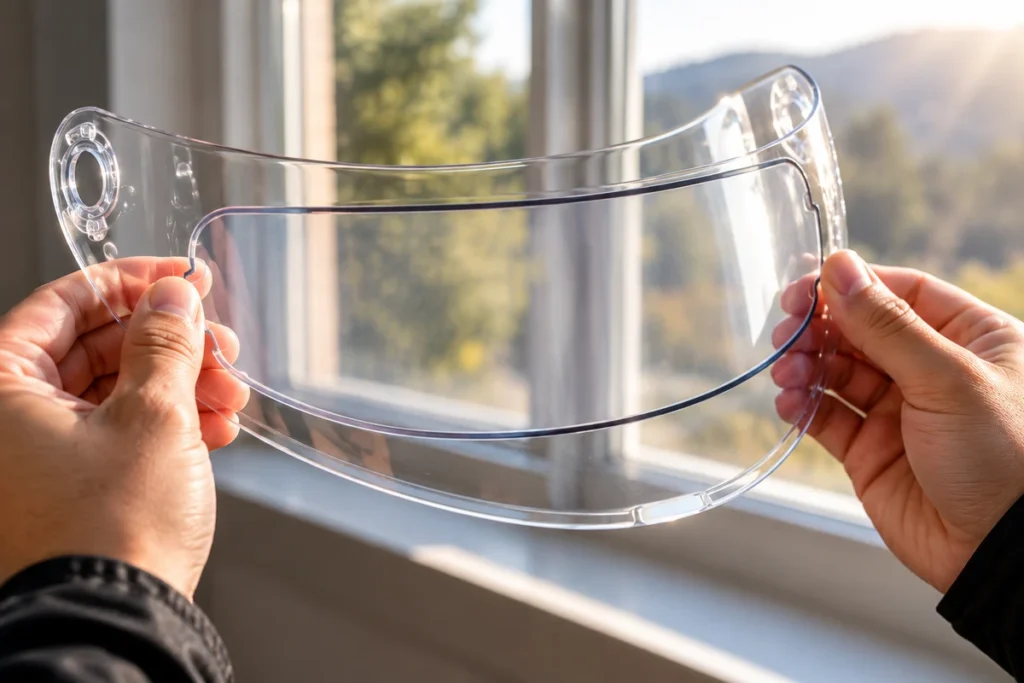
Don’t randomly turn the pins or force the lens into position. Different Pinlock systems can have different adjustment methods.
If moisture has already collected between the insert and visor, follow the manufacturer’s removal and drying instructions before putting everything back together.
A damaged or badly scratched insert may need replacing.
5. Check Whether Your Breath Guard Is Helping
Some full-face helmets come with a small piece around the nose area called a breath guard or breath deflector.
Its job is to help direct warm breath away from the visor.
Without one, more of the air you breathe out may travel upward toward the visor.
A correctly fitted breath guard can sometimes reduce this problem.
If your helmet already has one, check that:
- It’s sitting in the correct position.
- It hasn’t become loose.
- It doesn’t touch your nose painfully.
- It doesn’t block your view.
Use only a breath guard approved for your helmet model.
One thing worth knowing: a breath guard and a chin curtain aren’t always the same thing.
A chin curtain usually sits below your chin to reduce wind entering the helmet. It can change how air moves inside, so check your manual before fitting or removing one.
If your helmet has both, read its manual before changing anything.
Don’t assume that adding more padding or blocking more air will stop the mist.
6. Be Careful With Anti-Fog Sprays
You may have seen products sold as anti-fog spray for motorcycle helmets.
Some are intended to help stop water from forming visible droplets on a visor. Others are designed for goggles or different types of lenses.
The important question isn’t just whether a product says anti-fog.
It’s whether your helmet manufacturer allows that product on your particular visor.
Some visors already have special coatings. Using the wrong liquid can damage those coatings or leave marks that affect your view.
For example, HJC’s visor-care guidance advises against spray-on chemical cleaners because certain chemicals may cause haze or distortion.
That doesn’t mean every anti-fog product is unsuitable for every helmet. It means there is no single spray that can safely be recommended for all visors.
Before using one:
- Read the visor manufacturer’s cleaning and care instructions.
- Check whether an anti-fog treatment is specifically allowed.
- Make sure the product is intended for your visor material and coating.
- Follow the product instructions exactly.
Don’t apply ordinary glass cleaner, household polish, or random chemicals because someone online says they worked.
Be especially careful around mirrored, tinted, and factory-coated visors.
Also, don’t spray anything onto a Pinlock insert unless its manufacturer specifically approves it.
If your visor has a compatible Pinlock option, that’s often a better starting point than experimenting with chemical treatments.
7. Keep the Visor and Helmet Interior Clean and Dry
Dirt and moisture can make an already frustrating fogging problem harder to manage.
Before your next ride, check the inside of the visor.
Look for fingerprints, dried marks, or a greasy film that makes the surface difficult to see through.
Clean it using the instructions for your visor model.
Avoid rubbing it dry with a rough cloth or paper towel. Fine dirt can scratch the surface, and cleaning products can damage certain coatings.
I have a separate guide explaining how to clean a motorcycle helmet visor without scratching it.
Also check the inside of your helmet after a wet ride.
If the lining is damp from rain or sweat, let the helmet dry in a well-ventilated place according to its manufacturer’s instructions.
Don’t place it next to a heater or use a hair dryer to speed things up.
If your helmet has removable comfort padding, follow the manual before taking it out to dry or wash.
Keeping things clean and dry won’t replace a good anti-fog system, but it removes one more source of moisture and poor visibility.
Pinlock vs Anti-Fog Spray: Which Is Better?
For a rider dealing with regular visor fogging, these are two of the most common options.
A Pinlock insert sits inside a compatible visor. It uses a moisture-absorbing lens and a sealed air gap to reduce condensation.
It doesn’t need to be reapplied like a spray, but it must fit correctly. It can also become scratched, dirty, or worn.
An anti-fog spray is applied to a surface, but its effect depends on the product and how it’s used.
It may need to be reapplied, and it isn’t suitable for every visor or coating.
So which should you choose?
If your visor supports a Pinlock insert, I would check that option first.
If your visor doesn’t support one, look at the manufacturer’s approved anti-fog options rather than choosing a spray based only on reviews.
And if fogging happens only occasionally, opening the correct vent may be enough.
The best solution depends on your helmet, visor, weather, and riding conditions.
How to Stop Helmet Visor Fogging in Cold Weather
Cold mornings are when many riders notice the problem most.

The outside of the visor gets cold, while the air inside the helmet becomes warm and damp from breathing.
When that moist air meets the cold visor, mist can form quickly.
Before leaving home, try these checks:
- Make sure the visor is clean and dry.
- Check that the chin vent opens properly.
- If you use a Pinlock, inspect its seal.
- Check that the breath guard is fitted correctly.
- Follow the manufacturer’s instructions for ventilation in cold weather.
Try the helmet while you’re stationary before setting off.
If the visor begins fogging as soon as you put it on, that’s a sign you should deal with the problem before riding.
Don’t wait until you’re on a busy road to find out whether your setup works.
What About Visor Fogging in Rain?
Rain can make visor fogging more difficult because the air is already damp.
You may also want to keep the visor closed to stop water reaching your face.
This is where a suitable anti-fog insert can be useful.
But there’s an important distinction between fog on the inside of the visor and rainwater on the outside.
An anti-fog insert is designed to help with moisture forming inside. It doesn’t clear rain off the outside of the visor.
If you see water trapped between a Pinlock lens and the visor, don’t treat it like ordinary fog. Stop safely and follow the fitting and drying instructions.
And don’t keep opening your visor in heavy rain just to let more air in. Water getting inside can create another visibility problem.
If you cannot see clearly enough to ride safely, stop somewhere safe and wait until you can fix the issue.
What to Avoid When Your Helmet Keeps Fogging
A few popular shortcuts can create more problems than they solve.
Don’t rub the visor with your glove while riding. You could scratch it, smear the mist, or take your attention away from the road.
Don’t use household glass cleaner without checking the manual. A motorcycle visor may have coatings that react badly to some cleaning chemicals.
Don’t put shaving cream, toothpaste, or household polish on the visor. These aren’t safe universal solutions, and some can leave residue or damage the surface.
Don’t alter the helmet’s vents or visor mechanism. Use the features the manufacturer designed.
Don’t ride with badly reduced visibility. Saving a few minutes isn’t worth riding when you can’t see properly.
If the visor has permanent cloudiness, scratches, or coating damage that affects your view, cleaning or anti-fog treatment may not fix it. Check whether the visor needs replacing.
What Should You Do If Your Helmet Visor Fogs While Riding?
This is the part that matters most.
If mist suddenly starts blocking your view, reduce your speed smoothly and pull over somewhere safe as soon as you can.
Use your signals and avoid sudden movements.
Once you’re stopped:
- Open the visor if it’s safe to do so.
- Allow the mist to clear.
- Check the vents and any anti-fog insert.
- Make sure you can see properly before riding again.
Don’t attempt to wipe the inside of the visor or remove a Pinlock while you’re moving.
If you can’t get a clear view, don’t continue riding and hope the fog will disappear.
A helmet should protect your head without leaving you unable to see the road.
Frequently Asked Questions
Why does my motorcycle helmet fog up when I stop?
When you’re stopped, less fresh air may move through the helmet. Warm breath can then build up inside and create mist on the cooler visor.
Opening the correct vents or using a compatible anti-fog insert may help.
Do Pinlock visors stop all fogging?
No system can promise completely fog-free vision in every condition.
A correctly fitted Pinlock can greatly reduce fogging, but very humid conditions, poor ventilation, a broken seal, or a wet insert can still cause problems.
Can I use anti-fog spray on a motorcycle helmet visor?
Only if your visor manufacturer allows it and the product is suitable for that visor’s material and coating.
Don’t assume a spray is safe just because it’s advertised for helmets.
Why is my visor still fogging with a Pinlock installed?
The silicone seal may not be making full contact with the visor, or moisture may have become trapped between the layers.
Check the fitting instructions. If the insert is damaged or no longer works properly, it may need replacing.
Does opening the chin vent help with helmet fogging?
It often can. The chin vent may help move moist air away from the visor.
How well it works depends on your helmet’s ventilation design and the weather.
Does a breath guard stop visor fogging?
It can help by directing your breath away from the visor, but it won’t solve every fogging problem.
Make sure you’re using the correct guard for your helmet and that it’s fitted properly.
Can a dirty visor cause fogging?
Fogging is mainly caused by moisture settling on a cooler surface. Dirt isn’t usually the main cause, but fingerprints, grease, and cleaning residue can make visibility worse.
Keep the visor clean using approved methods.
Is a Pinlock insert worth buying?
If you regularly ride in cold or damp weather and your visor supports a compatible insert, it’s worth considering.
Check the exact visor model before buying, and remember that correct installation matters just as much as the insert itself.
Final Thoughts
A foggy helmet visor can turn a normal ride into a frustrating one, particularly in cold weather or traffic.
Start with the simple checks. Make sure the vents are working, look at how your breath moves inside the helmet, and keep the visor clean.
If the problem continues, a compatible Pinlock insert may help. Anti-fog sprays are another option for some visors, but always check the manufacturer’s instructions first.
Most importantly, don’t continue riding if fog is blocking your view.
A clear visor matters more than reaching your destination a few minutes earlier.