
How long do motorcycle helmets last? Most manufacturers recommend replacing helmets after a few years of regular use, often around three to five years, depending on the brand, riding conditions, and helmet condition.
A motorcycle helmet might look perfectly fine after years of riding. The paint still shines, the visor works, and there are no obvious cracks. But does that mean it’s still safe?
Not necessarily.
Most motorcycle helmets need replacing after about three to five years of regular use, depending on the manufacturer’s instructions, riding conditions, and the helmet’s condition. Some manufacturers recommend a specific replacement interval, while others emphasize regular inspection and signs of wear.
And there’s one rule that matters more than the calendar: a helmet involved in a crash or significant impact may need immediate replacement, even when it looks undamaged.
Here’s how to work out whether your helmet still has useful life left.
How Long Do Motorcycle Helmets Typically Last?
For many riders, three to five years is a practical range to keep in mind. However, it isn’t a universal expiration period that applies to every helmet.
Different manufacturers have different recommendations.
For example:
- Bell: Its motorcycle helmet instruction manual recommends replacing helmets every three to five years, depending on use and condition, and immediately after an impact even if no damage is visible.
- HJC: Its helmet usage guidance recommends replacement every three to five years, depending on use and conditions.
- Snell Foundation: Its official FAQ recommends replacement after five years of normal use.
- SHOEI: Its helmet maintenance guidance recommends replacement five years after the first retail purchase.
- Arai: Its helmet replacement guidance recommends replacement within five years of first use.
A helmet can wear out even when the outside looks fine.
The interior comfort padding gradually compresses. Chin straps and fasteners experience repeated use. Sweat, sunlight, heat, and cleaning can affect materials over time.
A helmet used daily in heavy traffic may experience considerably more wear than one used occasionally and stored carefully.
The safest approach is to follow your specific helmet manufacturer’s instructions and replace it sooner if it becomes damaged, loose, or unreliable.
Do Motorcycle Helmets Have an Expiration Date?
Motorcycle helmets don’t all come with a simple expiration date like food or medicine.
Instead, you may find several dates associated with your helmet:
- Manufacture date: When the helmet was made.
- Purchase date: When you bought it.
- First-use date: When you started riding with it.
- Recommended replacement date: Based on the manufacturer’s guidance.
These dates are not interchangeable.
Imagine buying a helmet in 2026 that was manufactured in 2024. It has already spent two years in storage before you start using it.
Does that mean you automatically have only three years left?
Not necessarily. It depends on the brand, how the helmet was stored, and its condition.
Some replacement recommendations refer to normal use, while others take the age of materials into account.
Where Can You Find the Manufacture Date?
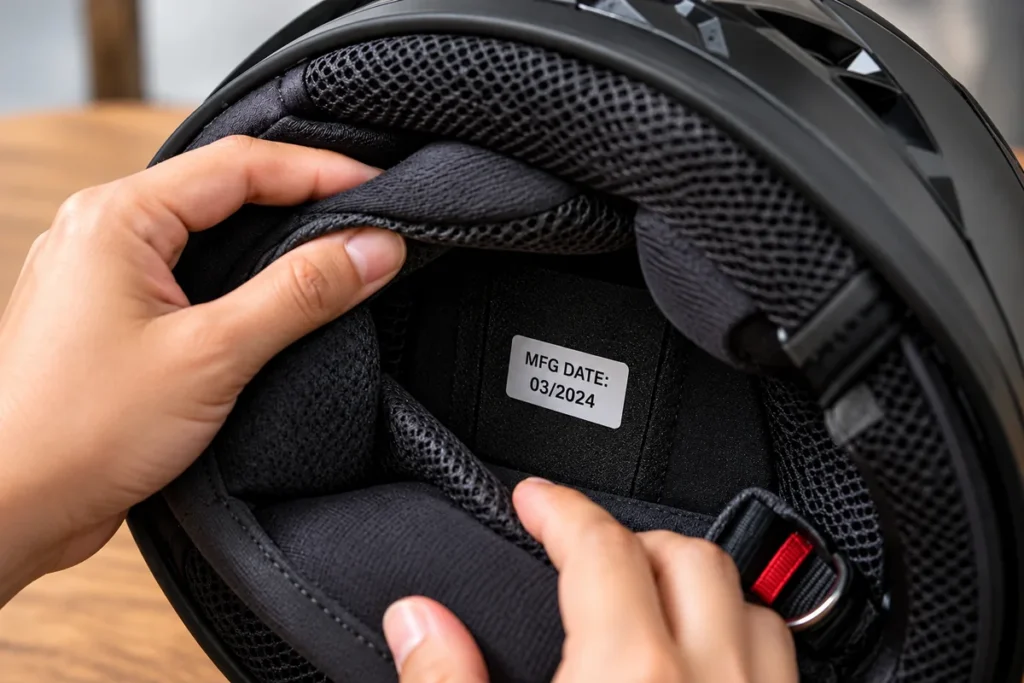
Check the helmet’s internal labels, under the comfort liner, or on the chin strap. The location varies by manufacturer.
Some helmets use a printed date, while others use a production code that requires checking the owner’s manual or contacting the manufacturer.
If you cannot identify the date, contact the brand or an authorized dealer rather than guessing.
How Long Do Motorcycle Helmets Last If Not Used?
An unused motorcycle helmet does not necessarily become unsafe the moment it reaches five years old.
In fact, the Snell Foundation explains that unused helmets stored in good condition do not automatically expire after five years.
However, unused doesn’t always mean unaffected by age.
A helmet stored in a cool, dry cupboard is in a very different environment from one left inside a hot garage or a car exposed to direct sunlight.
Even without riding, poor storage can affect the helmet’s components.
Before using an older, unused helmet:
- Check the manufacture date and model information.
- Read the manufacturer’s age and replacement guidance.
- Inspect the shell, liner, strap, and buckle.
- Look for signs of poor storage, such as deterioration or unusual odors.
- Make sure the helmet still fits securely.
- Contact the manufacturer if its age or condition is uncertain.
Don’t assume an unused helmet is safe forever. But don’t assume every unused five-year-old helmet has automatically expired, either.
6 Signs It’s Time to Replace Your Motorcycle Helmet
Age is only one reason to replace a helmet. Its condition can be even more important.
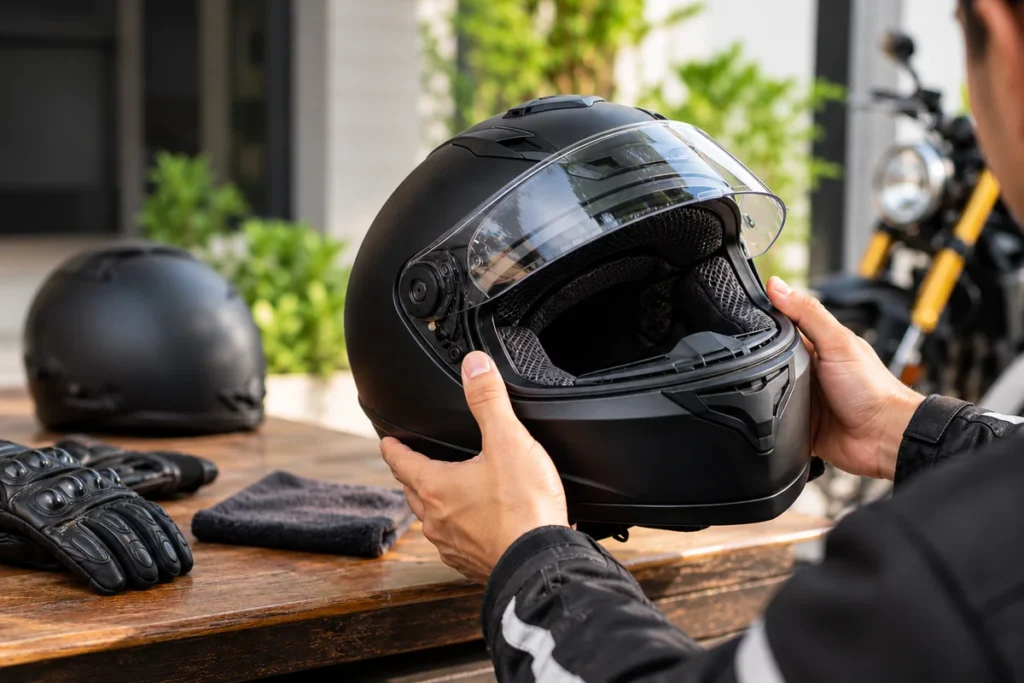
1. It Has Been Involved in a Crash
If your helmet struck the road, another vehicle, or another hard surface during a crash, stop using it and follow the manufacturer’s replacement instructions.
The impact-absorbing liner can compress without leaving obvious marks on the outside.
A helmet is designed to protect your head during an impact. After a serious hit, it may not protect you the same way again.
2. The Outer Shell Is Cracked or Seriously Damaged
Visible cracks, deformation, or other significant shell damage are warning signs.
Don’t attempt to hide damage with paint, adhesive, or filler.
Even when a repair improves the appearance, it does not establish that the helmet’s protective structure is safe.
For a closer look at cosmetic damage and its limitations, see my guide to scratches on a matte black helmet.
3. The Helmet No Longer Fits Properly
A helmet should fit snugly without moving excessively around your head.
Over time, comfort padding may compress, changing the fit.
If the helmet shifts easily, lifts excessively, or no longer stays securely positioned, it needs attention.
If the helmet still doesn’t fit correctly after approved adjustments, replace it. When buying a replacement, don’t assume your usual size will fit in another brand. My motorcycle helmet size chart explains how to measure your head and compare sizes before buying.
If you’re unsure whether your helmet still fits securely, follow these seven motorcycle helmet fit checks before riding.
4. The Chin Strap or Buckle Is Damaged
A helmet’s retention system helps keep it on your head during a crash.
Inspect it for:
- Frayed or torn straps
- Damaged stitching
- Cracked or faulty buckles
- Fasteners that won’t lock securely
- Excessive looseness or slipping
Don’t try to fix damaged straps or buckles yourself.
5. The Impact-Absorbing Liner Is Damaged
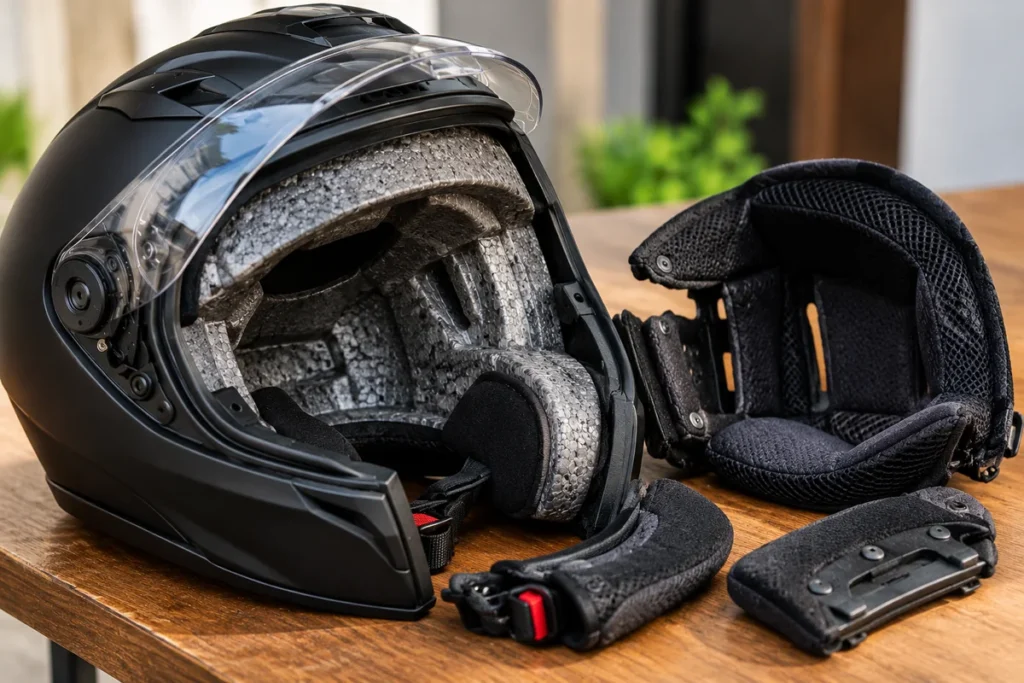
Beneath the comfort padding is the protective liner, often made from expanded polystyrene (EPS) foam.
Its job is different from that of the soft, removable padding.
If the protective liner is cracked, compressed, loose, or otherwise damaged, stop using the helmet.
Replacing the washable comfort padding does not restore a compromised EPS liner.
6. It Has Reached the Manufacturer’s Replacement Interval
Even without obvious damage, manufacturers may recommend replacement after a certain number of years.
Check the instructions for your exact helmet model rather than relying only on a general internet rule.
Does Helmet Lifespan Depend on How Often You Ride?
Yes. How you use and maintain your helmet can influence how quickly its components wear.
Consider two riders.
One commutes through busy city traffic every day, frequently riding in heat, humidity, dust, and rain.
The other rides a few weekends each month and stores the helmet indoors between trips.
Their helmets may not experience the same amount of wear, even if purchased on the same day.
Frequent use can mean more exposure to sweat, handling, sunlight, and cleaning.
For Indian riders commuting in cities such as Delhi, Mumbai, or Chennai, heat and humidity can make regular inspection and cleaning especially important.
American riders dealing with hot summers, long-distance touring, or frequent highway use should take the same precautions.
However, occasional use does not override a manufacturer’s age-based replacement instructions.
Does Helmet Brand Affect How Long It Lasts?
Brand and model matter because manufacturers use different materials, designs, and replacement recommendations.
But a famous brand name or high price does not automatically mean a helmet should be kept longer.
US and International Helmet Brands
Replacement guidance varies between manufacturers, including Bell, HJC, SHOEI, and Arai. The recommended interval may depend on the purchase date, first use, riding conditions, or the helmet’s condition.
Always follow the instructions for your specific helmet model rather than assuming every brand uses the same replacement schedule.
Helmet Brands Sold in India
If you own a STUDDS, Vega, Steelbird, SMK, Axor, or another helmet sold in India, check your exact model’s manual or the brand’s support page for replacement guidance. Contact the manufacturer if you cannot find it. Replacement recommendations differ by brand and model; do not assume a single verified interval applies to all helmets sold in India.
What About Helmet Certification?
In India, IS 4151:2015, administered by the Bureau of Indian Standards, covers protective helmets for motorcycle riders.
In the United States, motorcycle helmets intended for road use must meet the applicable FMVSS No. 218 (DOT) requirements.
These standards concern protective performance and compliance. A safety certification doesn’t mean your helmet will stay safe forever.
Whether your helmet carries an ISI or DOT marking, its condition, fit, impact history, and manufacturer instructions still matter.
Should You Replace a Motorcycle Helmet After Dropping It?
This depends on what happened, but you should never dismiss a potentially damaging impact.
There is an important difference between:
- An empty helmet accidentally falling from a low surface.
- A helmet striking the road while being worn during a crash.
The second situation is especially concerning because the helmet may have absorbed impact energy while protecting your head.
For an empty-helmet drop, guidance varies. HJC warns that a drop from as low as four feet can damage a helmet without visible signs. The UK government’s SHARP guidance says a helmet that rolls from a sofa onto carpet is likely to be fine, but recommends replacing helmets dropped onto hard surfaces. Snell takes a less categorical view of some empty-helmet drops. Follow the guidance for your exact helmet, and contact its manufacturer if unsure.
Don’t assume a helmet is safe just because you cannot see a crack.
If your helmet suffers a significant drop or you’re uncertain about its condition, stop using it until you’ve checked the manufacturer’s instructions or obtained appropriate advice from the manufacturer.
How to Help Your Motorcycle Helmet Last Longer
You cannot make a helmet last indefinitely, but good care can help prevent avoidable wear.
Clean It Gently
Use cleaning products approved by the manufacturer.
For many helmets, mild soap, water, and a soft cloth are appropriate for routine exterior cleaning.
Avoid gasoline (petrol), paint thinners, harsh solvents, and abrasive cleaners.
If you own a matte-finish helmet, my guide to cleaning a matte black helmet explains how to clean the finish without unnecessary rubbing or polishing.
Dry the Interior Properly
Sweat and moisture can leave the comfort padding unpleasant and dirty.
After riding, allow the helmet to air out in a suitable shaded, ventilated place.
If the comfort liner is removable, follow the manufacturer’s washing and drying instructions.
Avoid placing the helmet directly beside heaters or using high-temperature drying methods.
Store It Away From Excessive Heat
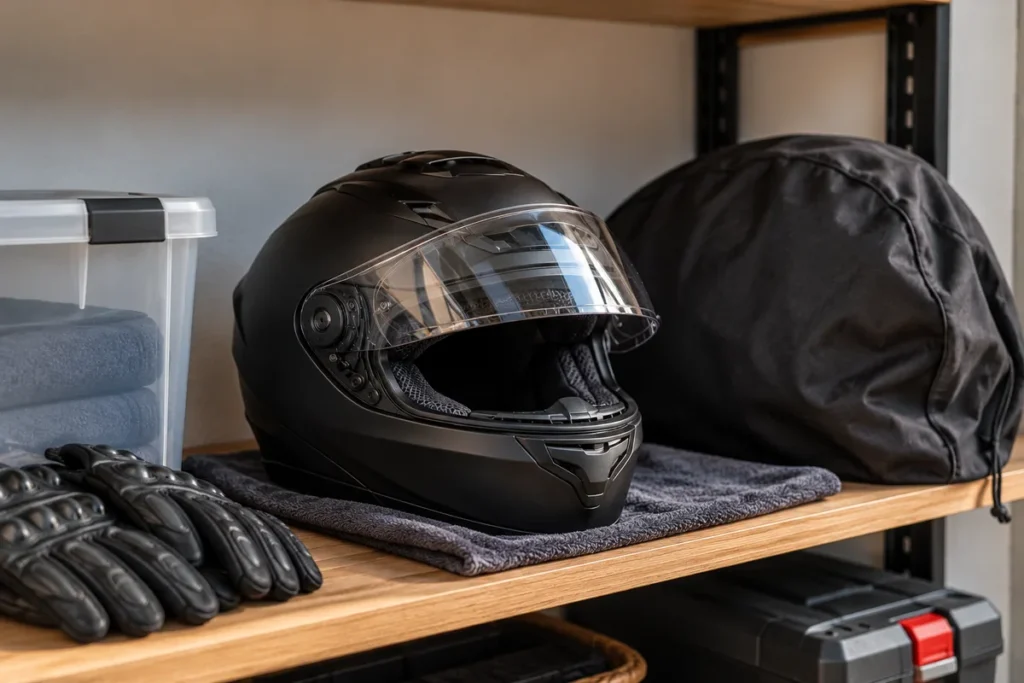
A helmet should not spend hours baking in a parked car or sitting in direct sunlight unnecessarily.
Choose a stable, cool, dry storage location.
If you ride in hot conditions, my article on whether black motorcycle helmets get hotter also explains how helmet color, sunlight, and ventilation affect riding comfort.
Avoid Unnecessary Modifications
Don’t drill holes, cut the liner, modify the chin strap, or apply unapproved chemicals.
Avoid repainting without the manufacturer’s approval. The UK government’s SHARP helmet-care guidance advises leaving painting and adhesive work to specialists because unsuitable products may weaken the shell.
Even a small change could make your helmet less safe.
Inspect It Before Riding
A quick check takes very little time.
Look at the shell, chin strap, buckle, visor mechanism, padding, and overall fit.
If anything feels unusual, investigate before heading onto the road.
Motorcycle Helmet Replacement Checklist
Use this checklist when deciding whether to keep using your helmet.
| Question | What to do |
|---|---|
| Has it been involved in a crash or damaging impact? | Stop using it; follow manufacturer replacement guidance |
| Is the shell cracked or deformed? | Replace the helmet |
| Is the protective EPS liner damaged? | Replace the helmet |
| Is the chin strap or buckle unreliable? | Do not ride with it; seek manufacturer guidance or replace |
| Does the helmet fit loosely? | Check approved padding options; replace if secure fit cannot be restored |
| Has it reached its recommended replacement age? | Follow the manufacturer’s instructions |
| Is its age or impact history unknown? | Contact the manufacturer; replacement is the safer choice when safety cannot be established |
Remember: A helmet can look new and still have an unknown impact history. Appearance alone is not enough to establish safety.
Frequently Asked Questions
Do Motorcycle Helmets Really Expire After Five Years?
Not all helmets have a universal five-year expiration date. Five years is a common replacement guideline, but some manufacturers recommend three to five years, and actual replacement needs also depend on use, condition, and impact history.
How Long Do Motorcycle Helmets Last If Not Used?
An unused helmet stored properly does not automatically expire after five years. However, materials and components can still be affected by age and storage conditions. Check the manufacturer’s instructions before using an older helmet.
Is a 10-Year-Old Motorcycle Helmet Still Safe?
A 10-year-old helmet should not be assumed safe simply because it looks undamaged. Its age, storage history, materials, fit, and manufacturer guidance all matter. If its suitability cannot be established, replacing it is the prudent choice.
Should I Replace My Helmet After a Minor Drop?
Follow the manufacturer’s guidance for your specific helmet and the circumstances of the drop. A crash impact is different from an empty helmet falling off a low surface, but damage may not always be visible.
Does a More Expensive Helmet Last Longer?
Not necessarily. Price alone does not determine safe service life. A helmet’s protective performance, fit, maintenance, and manufacturer replacement guidance are more relevant than its cost.
Can I Replace the Padding Instead of Buying a New Helmet?
Some helmets have manufacturer-approved replacement comfort liners and cheek pads. However, these are not substitutes for the protective impact-absorbing liner. If the EPS liner or other safety-critical components are damaged, replacing comfort padding won’t make the helmet safe.
How Do I Know When My Helmet Was Manufactured?
Look for a manufacture date or production code on the helmet’s labels, chin strap, or beneath the removable comfort liner. Check the owner’s manual or contact the manufacturer if the code is unclear.
Final Verdict: When Should You Replace Your Motorcycle Helmet?
For many motorcycle helmets, three to five years of regular use is a sensible replacement window, subject to the manufacturer’s instructions.
But the calendar isn’t the only thing to consider.
A damaged helmet, a loose fit, a faulty retention system, or a significant impact can make replacement necessary much sooner.
On the other hand, an unused helmet that has been stored properly does not necessarily become unsafe on its fifth birthday.
Whether you ride with a Bell or HJC helmet in the United States, or a STUDDS, Vega, or Steelbird helmet in India, the principle is the same:
Follow the manufacturer, inspect your helmet regularly, and never gamble on a helmet whose protective condition is uncertain.
Your helmet is there to protect you when you need it most. Make sure it’s still in good condition before every ride.