
You notice a scratch on your matte black motorcycle helmet. Maybe it brushed against a wall, rubbed against something in your garage, or picked up a mark during everyday use.
Now you’re wondering whether you can remove it without ruining the finish.
If you’re trying to figure out how to fix scratches on a matte black helmet, start by checking whether the mark is actually a scratch. Some marks are just dirt or material transferred onto the surface. Those may come off with gentle cleaning. But if the matte coating itself is scratched, there may be no safe DIY method to make it disappear.
And if the helmet was involved in a crash or a significant impact, appearance is no longer the main concern. Its protective structure may be damaged even when the outside looks fine.
Here’s how to tell what kind of mark you’re dealing with, what you can safely clean, and when to leave the helmet alone.
Can You Fix Scratches on a Matte Black Helmet?
It depends on what caused the mark and how deep it goes.
A light scuff or transferred material may come off during normal cleaning. A scratch that has actually damaged the painted surface is different. Cleaning won’t restore missing paint or coating.
Matte finishes are particularly tricky because their appearance depends on how the surface reflects light. Rubbing one spot with polish or an abrasive product can make it shinier than the surrounding area.
That means a product that works on a glossy helmet, car panel, or plastic surface might leave a noticeable patch on a matte helmet.
Before trying to remove it, take a closer look at the mark.
| What you notice | What it might mean | Safest next step |
|---|---|---|
| Light-colored streak that appeared after rubbing against something | Transferred material or surface contamination | Try manufacturer-approved gentle cleaning |
| Thin line that remains after cleaning | Scratch in the finish | Avoid DIY polishing; ask the manufacturer about approved options |
| Chip exposing a different color or underlying material | Paint or coating damage, possibly deeper | Contact the manufacturer before attempting a repair |
| Crack, deformation, or damage after an impact | Possible structural damage | Stop using the helmet and follow manufacturer replacement or inspection guidance |
You can’t reliably determine a helmet’s protective condition from a photograph or a simple scratch-depth test.
How to Tell a Surface Mark From Actual Helmet Damage
Before reaching for a cleaner, think about how the mark appeared.
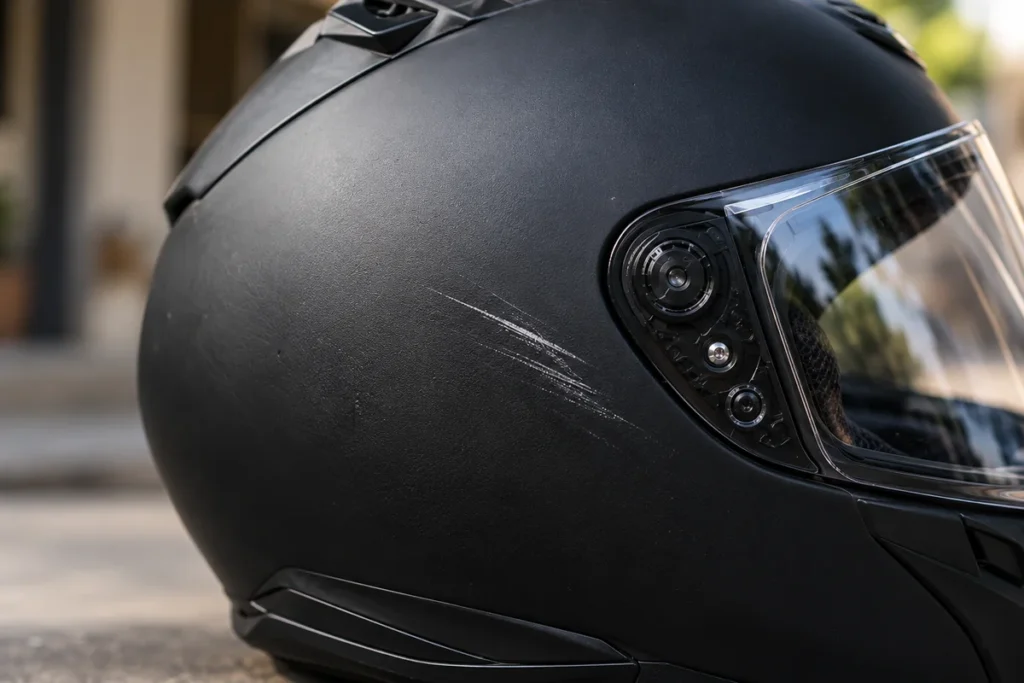
1. Surface Marks and Transferred Material
Sometimes a helmet rubs against a painted wall, luggage, or another object and picks up material from that surface.
The result can look like a scratch, especially on a dark matte finish.
If the mark comes off with gentle cleaning, it was probably something stuck to the surface rather than an actual scratch.
Don’t keep rubbing if it doesn’t come off easily. Repeated friction can create a shiny patch.
2. Scratches in the Matte Finish
A scratch in the painted finish may remain visible after the surface is clean.
Depending on the lighting, it might look lighter, darker, or slightly shinier than the surrounding paint.
There isn’t a universal home repair for this. Helmet manufacturers use different shell materials, paint systems, and finishes, so a product that seems harmless on one helmet may be unsuitable for another.
3. Chips, Cracks, and Possible Shell Damage
A chip or crack deserves more attention than a simple surface streak.
Don’t assume that a small mark means minor damage, or that an undamaged-looking shell is necessarily safe.
The impact-absorbing liner beneath the shell can be damaged during an impact without obvious external signs.
If the helmet was involved in a crash, took a significant blow, or has a suspected crack, stop using it and follow the manufacturer’s guidance. Replacement may be necessary.
How to Safely Clean Surface Marks on a Matte Black Helmet
If you’re wondering how to fix scratches on a matte black helmet, gentle cleaning is a good place to start—as long as the helmet hasn’t taken a hit. It may remove dirt or surface marks, but it won’t repair scratched paint.
Always follow the cleaning instructions for your specific helmet model.
Step 1: Check the Helmet’s Care Instructions
Look in the owner’s manual or on the manufacturer’s website.
Confirm which cleaning products are approved for your helmet’s shell and finish. Don’t assume that an automotive detailing product is safe just because its label says it’s suitable for matte paint.
Step 2: Use a Clean, Soft Cloth
Start with a clean, soft microfiber cloth and lukewarm water.
Avoid using a dirty towel or dry cloth on a dusty helmet. Small particles trapped between the cloth and the finish can create additional marks.
Step 3: Gently Clean the Affected Area
If the manufacturer’s instructions permit it, use a small amount of mild, neutral soap diluted in water.
Lightly wipe the affected area without pressing hard or repeatedly scrubbing the same spot.
If the mark doesn’t come off with gentle cleaning, stop. More pressure is unlikely to be the right answer.
Step 4: Remove Any Soap Residue
Use a separate clean cloth lightly dampened with water to remove the remaining soap.
Avoid soaking openings, vents, or interior components unnecessarily.
Step 5: Let the Helmet Dry Naturally
Gently blot away excess moisture with a clean, soft cloth and allow the helmet to air-dry.
Avoid direct heat, hair dryers, and other methods that could expose helmet components to excessive temperatures.
Once the surface is dry, inspect it under normal lighting.
If the mark is gone, no additional treatment is needed. If it remains, it may be damage to the finish rather than removable dirt.
For regular cleaning instructions, see my guide to cleaning a matte black helmet.
What Not to Use on a Scratched Matte Black Helmet
Trying to make a scratch disappear can sometimes create a much more obvious problem.
Avoid the following unless your helmet manufacturer has specifically approved a procedure for your model.
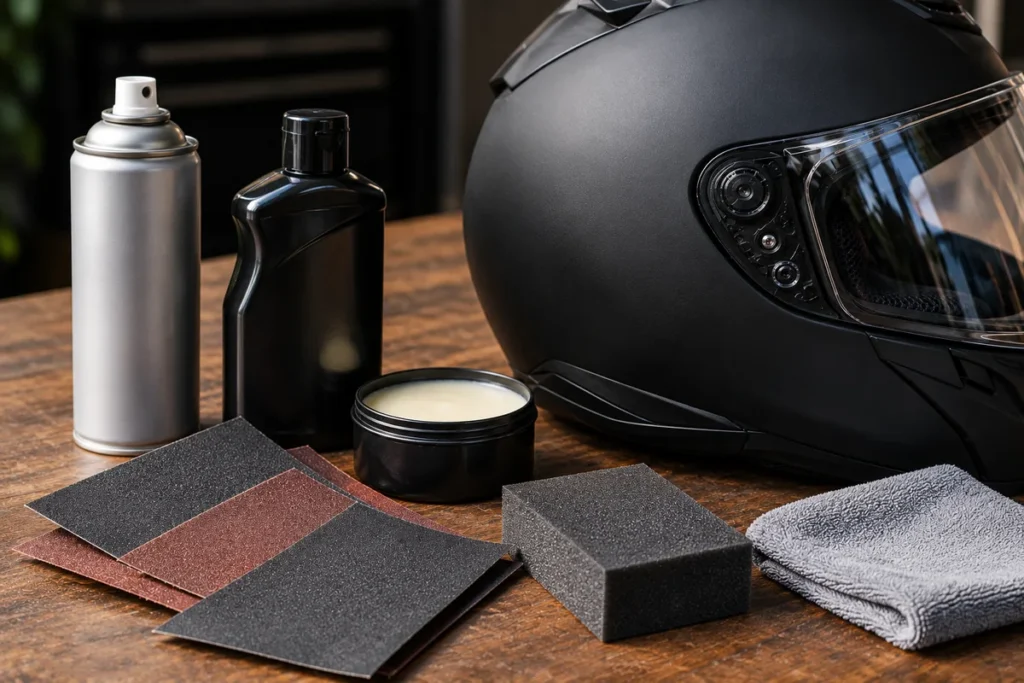
Polishing Compounds and Scratch Removers
Many scratch-removal products work by abrading or altering the surface.
On matte paint, that can create a glossy spot that stands out from the rest of the helmet.
SHOEI specifically advises against abrasive compounds and waxes on its matte-painted helmets.
Sandpaper and Abrasive Pads
Sanding removes material. It’s not a suitable general DIY solution for a motorcycle helmet shell or its protective finish.
Even very fine abrasives can permanently change the appearance of matte paint.
Wax and Gloss-Enhancing Products
A matte helmet isn’t supposed to have the same reflective finish as a glossy helmet.
Wax and gloss-enhancing products may leave uneven shine, residue, or discoloration.
Solvents and Strong Household Cleaners
Avoid gasoline, paint thinner, acetone, and other harsh solvents.
These substances can damage helmet finishes and may affect certain plastics or other helmet components.
Even products marketed as general-purpose cleaners should not be used unless they’re compatible with your helmet.
Heat and DIY Paint Repairs
Don’t use heat to smooth a scratch or attempt to melt, reshape, or blend the coating.
Also avoid applying random spray paint, nail polish, or automotive touch-up products.
A cosmetic improvement isn’t worth introducing chemicals or heat that the manufacturer hasn’t approved.
Can You Touch Up or Repaint a Matte Black Helmet?
Possibly, but this is something to discuss with the helmet manufacturer before doing anything.
A touch-up might seem straightforward: find matching black paint, apply a little, and let it dry.
In practice, matching a matte finish can be difficult. Two black paints can look noticeably different because of their sheen, texture, and coating.
The bigger concern is that some paints and thinners can damage the materials used to make the helmet.
According to SHOEI’s official helmet painting FAQ, self-painting is not recommended because some paints and thinners may damage helmet materials. SHOEI also says it doesn’t sell a touch-up pen for scratched painted surfaces.
Arai provides specific repainting precautions in its helmet instructions, illustrating why manufacturer-specific guidance matters.
Don’t treat repainting advice for one helmet brand as permission to repaint another brand’s helmet.
If the scratch is purely cosmetic and bothers you, contact the manufacturer with your helmet’s model information and clear photographs. Ask whether any approved touch-up or refinishing option exists.
If there isn’t one, leaving a cosmetic scratch alone may be safer than experimenting with a repair.
When Should You Replace a Scratched Motorcycle Helmet?
Not every cosmetic scratch automatically means you need a new helmet.
What matters more is how the scratch happened.
Replace or Seek Manufacturer Guidance After a Significant Impact
If you crashed while wearing the helmet or it sustained a significant impact, don’t judge its condition by the paint alone.
A helmet’s impact-absorbing materials can be damaged in ways that aren’t visible from the outside.
SHOEI recommends replacing a helmet after a significant impact. It also offers an impact inspection service for eligible helmets in the US. Check SHOEI’s current eligibility requirements before sending a helmet for inspection, and follow its guidance on whether replacement is necessary.
When replacement is required, don’t attempt to make the helmet usable again through a cosmetic repair.
Stop Using a Helmet With Suspected Structural Damage
Watch for cracks, a shell that looks bent or misshapen, a damaged chin strap or buckle, or signs of damage to the foam liner inside.
Don’t sand, fill, glue, or paint over suspected structural damage.
Contact the manufacturer or replace the helmet as directed.
Consider the Helmet’s Age and Overall Condition
A helmet can need replacement even without an obvious scratch.
Manufacturers provide guidance about service life, wear, fit, liner condition, and impact history.
For example, SHOEI recommends replacement five years after the first retail purchase, while Arai recommends replacement within five years of first use. Check your own helmet’s manual rather than applying one brand’s timeline to every helmet.
For a closer look at replacement timelines and warning signs, read my guide on how long motorcycle helmets last.
The key question isn’t simply, “Can I hide this scratch?”
It’s “Is this helmet still safe to use?”
How to Prevent Scratches on a Matte Black Helmet
A few everyday habits can help protect the finish.
Store It Somewhere Stable
Keep your helmet on a clean, stable surface where it won’t roll, fall, or rub against hard objects.
Avoid balancing it on a motorcycle mirror, handlebar, or other narrow surface where it could fall.
Heat and sunlight are also worth considering when storing your helmet. If you’re curious about how helmet color affects heat, read my guide on whether black motorcycle helmets get hotter.
Use a Clean Helmet Bag
A soft helmet bag can help prevent rubbing during storage and transport.
Make sure the bag itself is clean. Dirt trapped inside can still mark the finish.
Keep It Away From Keys and Other Hard Objects
Don’t pack your helmet tightly against tools, metal accessories, or other items that might scrape its surface.
Clean Dirt Before It Builds Up
Dust, road grime, and dried insects can make cleaning more difficult.
Use the cleaning method recommended by the manufacturer, and avoid aggressive rubbing.
Don’t Chase Every Tiny Mark
Matte finishes can show handling marks and everyday wear.
Trying to eliminate every visible imperfection with increasingly strong products may do more harm than the original mark.
If you’re still deciding between finishes, my matte vs gloss motorcycle helmet comparison explains how their appearance and maintenance differ.
Frequently Asked Questions
Can Toothpaste Remove Scratches From a Matte Black Helmet?
Toothpaste can contain abrasive ingredients. It isn’t a recommended scratch-removal method for a matte helmet, because rubbing may alter the finish or create a shiny patch.
Can I Use a Magic Eraser on a Matte Black Helmet?
Avoid it unless your helmet manufacturer explicitly approves it. Melamine cleaning sponges are abrasive and can change the appearance of a matte coating.
Can I Buff Scratches Out of a Matte Black Helmet?
Buffing can change the surface sheen and leave a glossy area. It’s not a recommended general DIY fix for matte helmet paint.
Are Small Scratches on a Motorcycle Helmet Dangerous?
A small scratch doesn’t always mean the helmet is damaged underneath. But you can’t tell whether it’s safe just by looking at the scratch. Consider how the mark occurred, check for other damage, and follow the manufacturer’s instructions, especially after an impact.
Can I Use a Black Touch-Up Pen on My Helmet?
Don’t use one without approval from your helmet manufacturer. Matching the color doesn’t establish that the product is compatible with the helmet’s paint or shell materials.
Will a Matte Black Helmet Scratch More Easily Than a Glossy Helmet?
Scratch visibility and resistance depend on the specific finish, coating, handling, and helmet model. Matte surfaces can be especially difficult to restore because polishing may change their appearance.
Should I Replace My Helmet After Dropping It?
It depends on how the helmet fell. Dropping an empty helmet isn’t necessarily the same as hitting the ground during a crash. Still, if it took a hard hit, you notice damage, or you’re unsure about its condition, check with the manufacturer before wearing it again.
Final Thoughts
Learning how to fix scratches on a matte black helmet starts with knowing the difference between a surface mark and actual damage to the finish.
Gentle, manufacturer-approved cleaning may remove transferred material. But scratches in matte paint generally can’t be treated like scratches on a glossy surface.
Avoid polishing, sanding, harsh chemicals, and unapproved touch-up products. If the helmet has been involved in an impact or shows signs of structural damage, prioritize manufacturer guidance and replacement over appearance.
A small scratch might be annoying, but it’s not worth risking your helmet’s safety just to make it look new again.