
Are black motorcycle helmets hotter than white ones? Yes, their outer shells can get significantly hotter in direct sunlight. Black surfaces generally absorb more sunlight than white surfaces, which can make a black helmet feel noticeably warmer to the touch.
But there’s an important difference between a hot helmet shell and a hot head.
A motorcycle helmet has an outer shell, an impact-absorbing liner, and interior padding. These layers help slow down heat reaching your head. How comfortable the helmet feels also depends on airflow and riding conditions.
So, are black motorcycle helmets hotter when you’re actually riding? The answer is more complicated than the color alone suggests.
Here are five things to know before choosing a black helmet for summer.
1. Black Motorcycle Helmets Absorb More Sunlight
Black surfaces generally absorb more incoming sunlight than white surfaces.
When two otherwise similar helmets sit in direct sunlight, a black shell can reach a higher surface temperature than a white shell.
This is particularly noticeable when a helmet is left outdoors on a sunny day.
However, the outer surface temperature doesn’t tell the whole story.
The heat you feel inside a motorcycle helmet depends on its construction, ventilation, and surrounding conditions. A hot outer shell doesn’t necessarily mean the interior is equally hot.
That’s why helmet color is only one factor to consider when choosing a helmet for warm weather.
2. What a Black vs White Helmet Temperature Test Shows
A temperature comparison published by Velo examined how black and white cycling helmets heated up in direct sunlight.
Velo placed two similar cycling helmets in direct sunlight and used fans to simulate airflow. Temperatures were recorded six times over 50 minutes.
According to the published readings, the black helmet’s exterior reached approximately 175°F (79°C), compared with approximately 120°F (49°C) for the white helmet.
But the temperatures inside the helmets were different.
The black helmet was several degrees warmer inside at most earlier readings. For example, one comparison showed approximately 116.7°F inside the black helmet versus 108.8°F inside the white one.
By the final reading, however, the interior temperatures were much closer:
- Black helmet interior: 111.4°F (44.1°C)
- White helmet interior: 110.8°F (43.8°C)
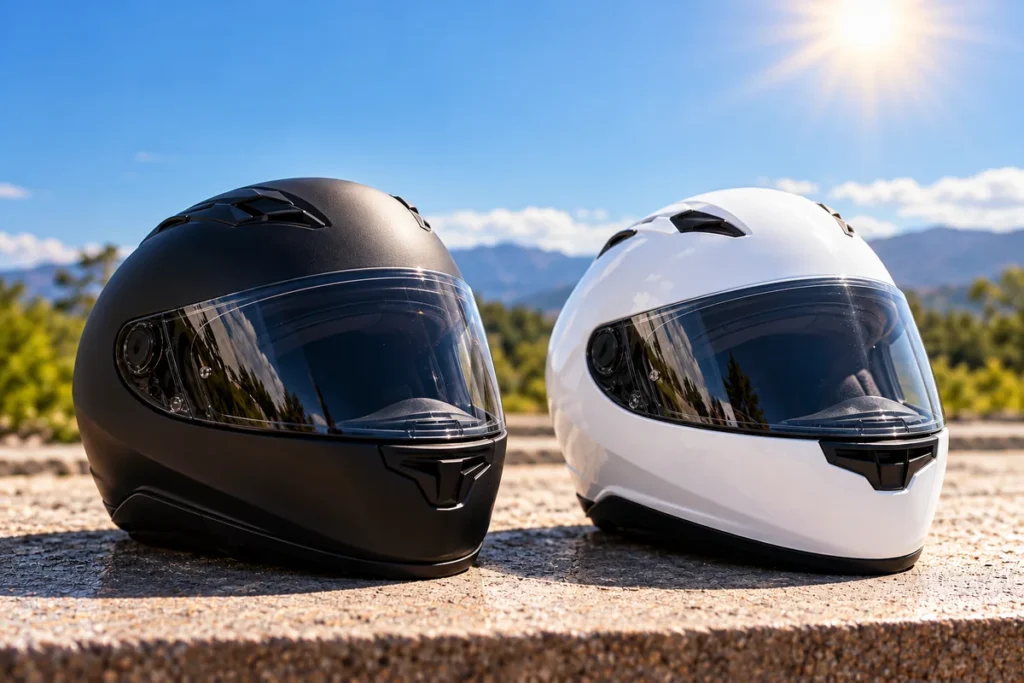
These figures show why the temperature outside a helmet isn’t necessarily the same as the temperature inside. The helmet photo shown here is just for reference, not from Velo’s test.
The black helmet got much hotter on the outside, but the temperature difference inside changed throughout the test.
An important limitation: The test used two different models of cycling helmets, with fans to simulate airflow. It did not test motorcycle helmets being worn on the road. These results cannot tell us exactly how much hotter a black motorcycle helmet will feel while riding.
I haven’t conducted my own helmet temperature testing. This discussion is based on published comparisons and manufacturer information, and actual results can vary between helmets and conditions.
What Does This Mean for Motorcycle Riders?
The test shows that dark helmets can absorb more heat from the sun than lighter ones.
However, it doesn’t prove that a black motorcycle helmet will always feel a specific number of degrees hotter inside.
Motorcycle helmets differ from cycling helmets in construction, padding, coverage, and ventilation.
So, don’t judge how comfortable a helmet will be in summer by its color alone.
3. Why Helmet Ventilation Matters in Hot Weather
If you’re wondering whether black motorcycle helmets are hotter during everyday riding, ventilation deserves close attention.
A motorcycle helmet’s ventilation system is designed to move air through the helmet and help remove warm, damp air.
For example, SHOEI explains its helmet ventilation design using intake openings, exhaust outlets, and air channels within the EPS liner.
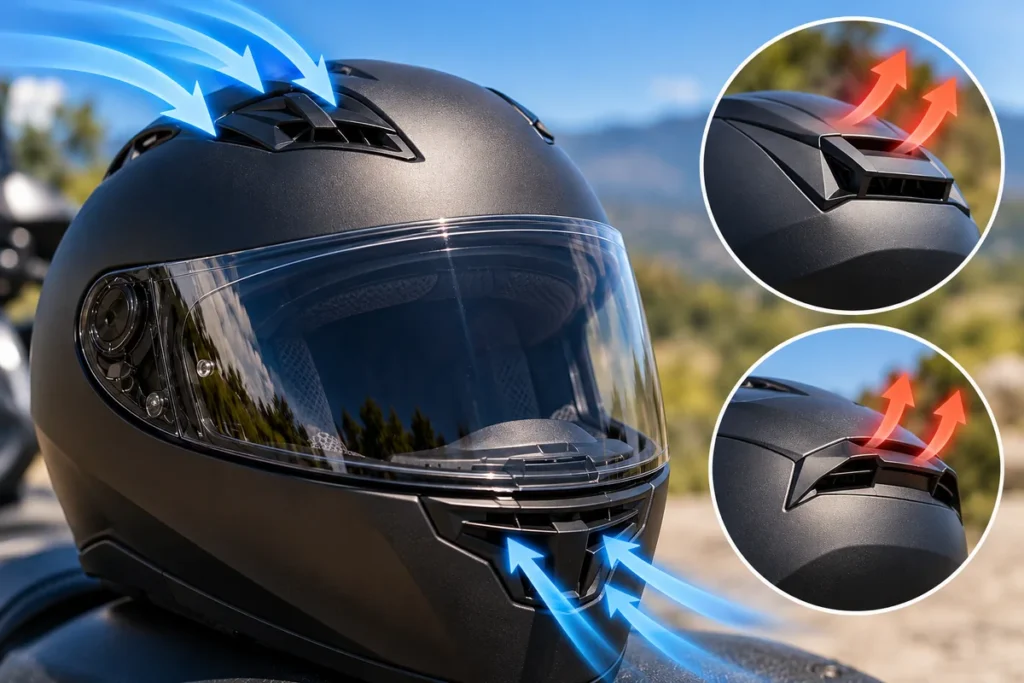
As air enters the helmet, it can move through these channels and help carry heat and moisture toward the exhaust openings.
How well the vents work depends on the helmet and how you’re riding.
Riding Speed Makes a Difference
When you’re moving at road speed, airflow through a helmet’s vents can help improve comfort.
But when you’re sitting in slow traffic or waiting at a traffic light, airflow is reduced.
This means the same helmet may feel comfortable on an open road and much warmer during a summer commute.
A white helmet with poor ventilation may feel less comfortable than a black helmet with effective airflow, although that doesn’t eliminate the black shell’s greater tendency to absorb sunlight.
Hot Weather and Humidity Also Matter
Ventilation isn’t the same as air conditioning.
When the surrounding air is hot, the air entering your helmet is hot too. And when humidity is high, sweat may evaporate less effectively.
Your head can still feel hot and sweaty, even with several vents open.
So, when comparing summer helmets, consider ventilation performance rather than relying on color alone.
4. Are Matte Black Helmets Hotter Than Gloss Black?
There’s another question worth addressing: are matte black motorcycle helmets hotter than gloss black helmets?
Both finishes are dark, and both can absorb considerable sunlight.
A glossy finish reflects light differently from a matte finish, but that doesn’t automatically tell us which helmet will be hotter inside.
The result can depend on the specific paint or coating, helmet construction, sunlight exposure, and ventilation.
Without testing the same helmet in both finishes under the same conditions, we can’t say matte black is always hotter than gloss black.
Does the Finish Affect Summer Comfort?
It may influence how the outer surface absorbs and reflects sunlight, but there isn’t enough consistent evidence to make a universal claim about the temperature difference between matte and gloss black motorcycle helmets.
If I were choosing between them, I’d focus more on fit, airflow, and how well the helmet is made.
If you’re deciding between the two finishes, see my matte vs gloss motorcycle helmet comparison for their differences in appearance, cleaning, and maintenance.
5. Can You Wear a Black Motorcycle Helmet in Summer?
Yes, you can wear a black motorcycle helmet in summer. Its shell can get hotter, but that doesn’t automatically make it a bad choice.
A well-fitting black helmet with effective ventilation can still be suitable for warm-weather riding.
Before choosing a helmet, I’d consider these factors.
Proper Fit
Don’t buy a larger size just because you think extra space will keep your head cooler. An incorrectly fitted helmet can make the helmet less protective. If you’re unsure about your size, check my motorcycle helmet size chart to measure your head and compare sizes across brands.
To check whether your helmet fits securely, follow my seven motorcycle helmet fit checks.
Safety Certification
Look for the certification required where you ride, such as DOT (FMVSS 218) in the US, the applicable ECE approval in Europe, or BIS certification (commonly called ISI) in India.
Helmet color doesn’t replace the need for proper protective construction and certification.
Ventilation Design
Check how the helmet’s intake and exhaust vents work.
If possible, look for credible reviews discussing ventilation in real riding conditions rather than relying only on the number of visible vents.
Interior Comfort
Comfort padding can influence how warm and damp a helmet feels.
Removable, washable liners can also make maintenance easier during summer when sweat accumulates more quickly.
Your Riding Conditions
Think about where and when you ride.
Someone who spends most of their time moving on open roads may have a different experience from someone commuting through heavy traffic in extreme heat.
That’s why it’s worth thinking about where you ride, not just whether the helmet is black or white.
How to Stay Cooler While Wearing a Black Motorcycle Helmet
If you already own a black motorcycle helmet, you don’t necessarily need to replace it with a white one.
A few practical habits can help improve comfort.
Open the Vents When Appropriate
Check that your helmet’s ventilation openings are functioning correctly and are set for the conditions.
Some helmets have separate chin, forehead, and top vents. Follow the manufacturer’s instructions to understand how yours works.
Keep the vents clear of dirt and debris.
Avoid Leaving Your Helmet in Direct Sunlight
A black helmet left on a parked motorcycle can become hot before you put it on.
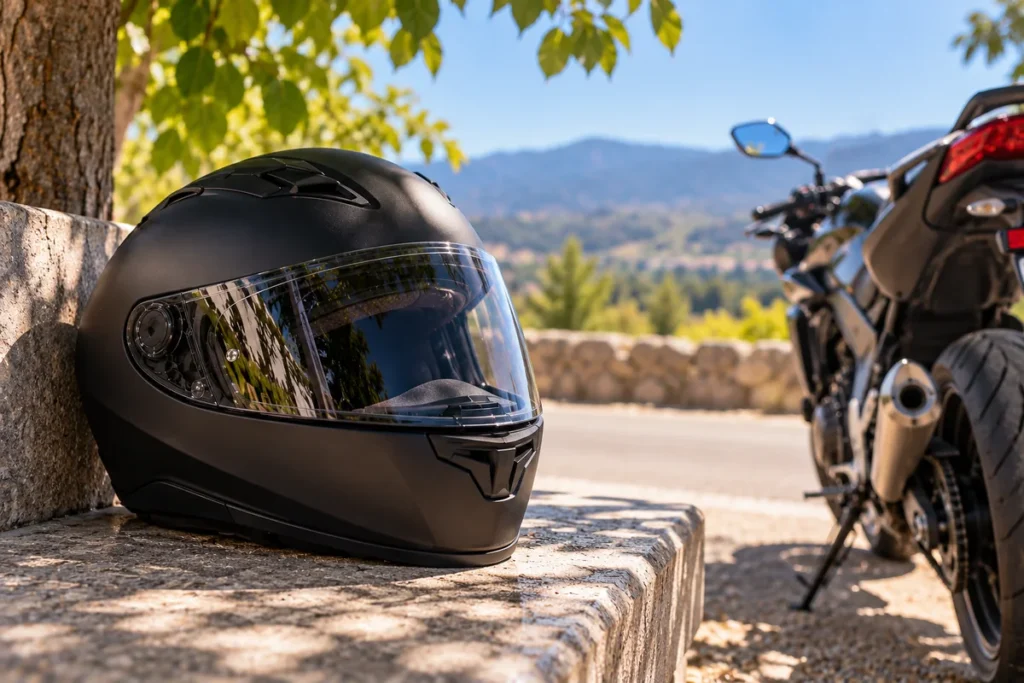
When possible, store your helmet in a shaded, secure location.
Avoid exposing it to excessive heat, and follow the manufacturer’s storage recommendations.
Keep the Interior Padding Clean
Sweat and built-up dirt can make a helmet unpleasant to wear.
If your helmet has removable padding, clean it according to the manufacturer’s instructions and let it dry completely before reinstalling it.
For the exterior, my guide to cleaning a matte black helmet explains how to maintain the finish without using unsuitable polishing products.
Consider a Suitable Helmet Liner
A thin, breathable liner approved for use with your helmet may help manage sweat.
However, additional material can change the fit. Make sure the manufacturer permits it and that your helmet remains properly fitted.
Take Breaks in Extreme Heat
On particularly hot days, take breaks in the shade, stay hydrated, and avoid unnecessary heat exposure.
If you experience dizziness, confusion, faintness, or other signs of heat illness, stop riding somewhere safe and seek appropriate help.
Should You Choose a White Helmet Instead of a Black One?
If your main concern is reducing sunlight absorption, a white helmet has an advantage.
White surfaces generally reflect more sunlight than black surfaces, so a white shell is less likely to become as hot under otherwise similar conditions.
That makes a light-colored helmet a reasonable option for riders who regularly face intense sunshine.
But a helmet’s color doesn’t tell you everything about its interior comfort.
If you’re comparing the same helmet model in black and white, choosing white may help reduce exterior heating.
If you’re comparing two completely different models, fit, protection, and ventilation should come first.
A helmet that fits poorly isn’t a better choice simply because its shell is white.
Frequently Asked Questions
Are Black Motorcycle Helmets Hotter Than White Helmets?
Black motorcycle helmets can develop higher exterior temperatures than white helmets in direct sunlight. The difference inside depends on helmet construction, ventilation, weather and time spent in the sun.
Do Black Motorcycle Helmets Get Hot in the Sun?
Yes. Black helmet shells absorb sunlight and can become hot when left outdoors. Keeping your helmet in the shade when parked can help prevent it from becoming excessively warm before a ride.
Are Matte Black Helmets Hotter Than Gloss Black Helmets?
Not necessarily. Matte and gloss finishes reflect light differently, but the actual temperature difference depends on the coatings and helmet construction. There isn’t enough evidence to say one is always hotter.
Does a Black Helmet Make Your Head Hotter?
It can contribute to heat exposure, but shell color isn’t the only factor. The helmet’s liner, airflow, weather, and riding conditions affect the temperature and comfort inside.
Are Black Motorcycle Helmets Safe in Summer?
Yes, provided the helmet is suitable for motorcycle use, meets the relevant safety requirements, fits correctly, and is in good condition. Riders should still take precautions against extreme heat.
What Is the Best Motorcycle Helmet Color for Hot Weather?
White and other light colors generally absorb less sunlight than black. However, ventilation, fit, and protection remain essential when choosing a helmet for summer.
Final Verdict: Are Black Motorcycle Helmets Hotter?
Yes, black motorcycle helmets can become hotter on the outside than white helmets in direct sunlight. But the difference inside is not necessarily as large, and it can vary with helmet design and riding conditions.
The published test shows that a helmet can get much hotter on the outside without the inside heating up by the same amount. But since the test used cycling helmets, we can’t assume motorcycle helmets will behave exactly the same way.
If reducing sunlight absorption is your top priority, a white or light-colored helmet is worth considering.
But if you prefer a matte black motorcycle helmet, there’s no reason to reject it based on color alone.
Choose a helmet that fits properly, meets the relevant safety requirements, and has effective ventilation. Those factors deserve attention regardless of the finish.