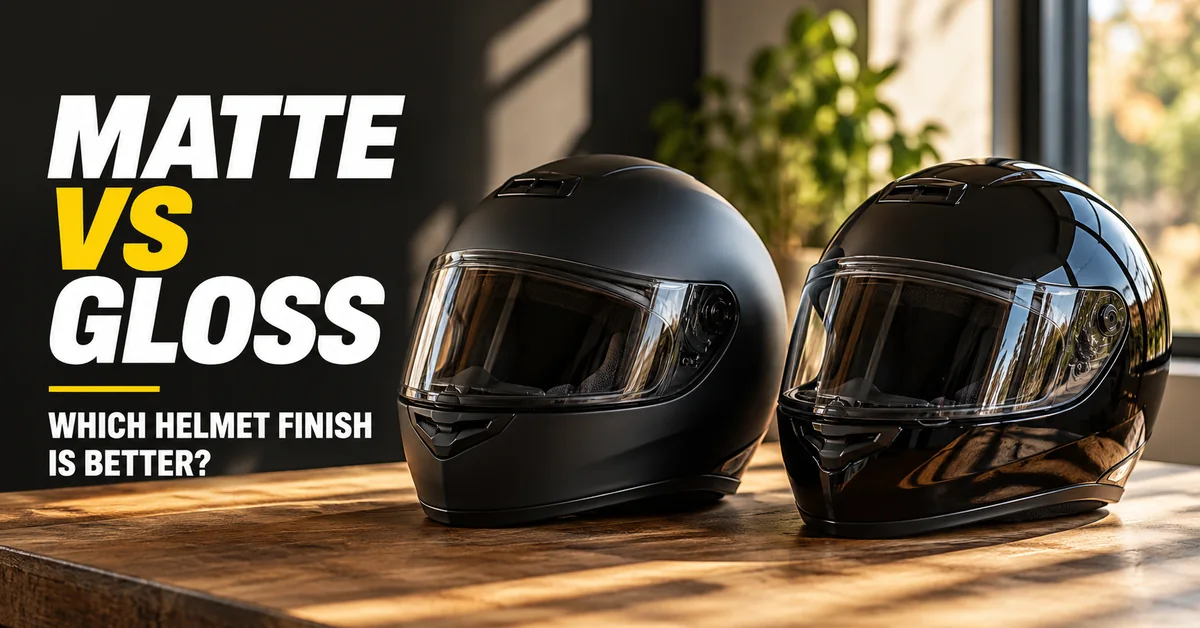
Choosing between a matte (also written “matt”) and a gloss motorcycle helmet might seem like a small decision, but the finish affects how the helmet looks and how you care for it.
A matte black helmet has a low-sheen surface, while a gloss black helmet has a shiny, reflective finish. Both can look good on the same motorcycle. The differences become more noticeable when you’re dealing with fingerprints, dirt, scratches, and regular cleaning.
So which one should you choose?
If you prefer an understated appearance and don’t mind being careful with the finish, matte may suit you. If you like a shiny surface and want more flexibility with manufacturer-approved cleaning products, gloss may be the better choice.
There are a few things worth knowing before deciding.
Matte vs Gloss Helmet: Quick Comparison
| Feature | Matte helmet | Gloss helmet |
|---|---|---|
| Appearance | Low-sheen, understated | Shiny, reflective |
| Reflections | Softer, more diffuse reflections | Clearer, sharper reflections |
| Fingerprints | May leave noticeable marks | Often easier to wipe clean |
| Cleaning | Requires gentle cleaning and finish-specific care | May allow more cleaning options, depending on the manufacturer |
| Scratches | Scuffs and shiny patches can be difficult to correct | Fine scratches and swirl marks may be noticeable |
| Wax and polish | Avoid unless specifically approved | Some products may be permitted |
| Protection | Depends on construction, fit, and certification | Depends on construction, fit, and certification |
The important point is that matte and gloss describe the exterior finish, not the protective quality of the helmet.
What Is a Matte Motorcycle Helmet?
A matte motorcycle helmet has a finish that reflects light in a more diffuse way than a glossy surface.
Instead of producing a clear, mirror-like reflection, it has a softer, less shiny appearance. This is particularly noticeable on black helmets.
Matte finishes are available on full-face, modular, open-face, and adventure helmets. The finish itself does not tell you what the shell is made from or how well the helmet will fit.
One thing to understand is that a matte surface needs appropriate care.
SHOEI’s helmet painting FAQ explains that its matte painted surfaces can be more susceptible to visible scratches and stains. It also warns that hard rubbing and unsuitable cleaning products can change the finish’s appearance.
That doesn’t mean matte helmets are difficult to own. It means you should follow the manufacturer’s cleaning instructions instead of treating the surface like ordinary glossy paint.
What Is a Gloss Motorcycle Helmet?
A gloss motorcycle helmet has a shiny exterior that reflects light more clearly.
On a gloss black helmet, you may see distinct reflections from windows, lights, nearby vehicles, and other objects.
Gloss finishes are common across different motorcycle helmet styles and price ranges.
They can also offer more flexibility in cosmetic maintenance, although that depends on the manufacturer’s instructions.
For example, SHOEI’s care guide says a plastic cleaner or wax can be used on its painted helmet shells, but not on ventilation sliders or other plastic parts. It also advises against using polishes on matte-finish paintwork.
That is not permission to use any automotive cleaner or wax on every glossy helmet. Different coatings, plastics, vents, and visors may require different care.
Matte vs Gloss Helmet: Which Looks Better?
This comes down to personal preference.
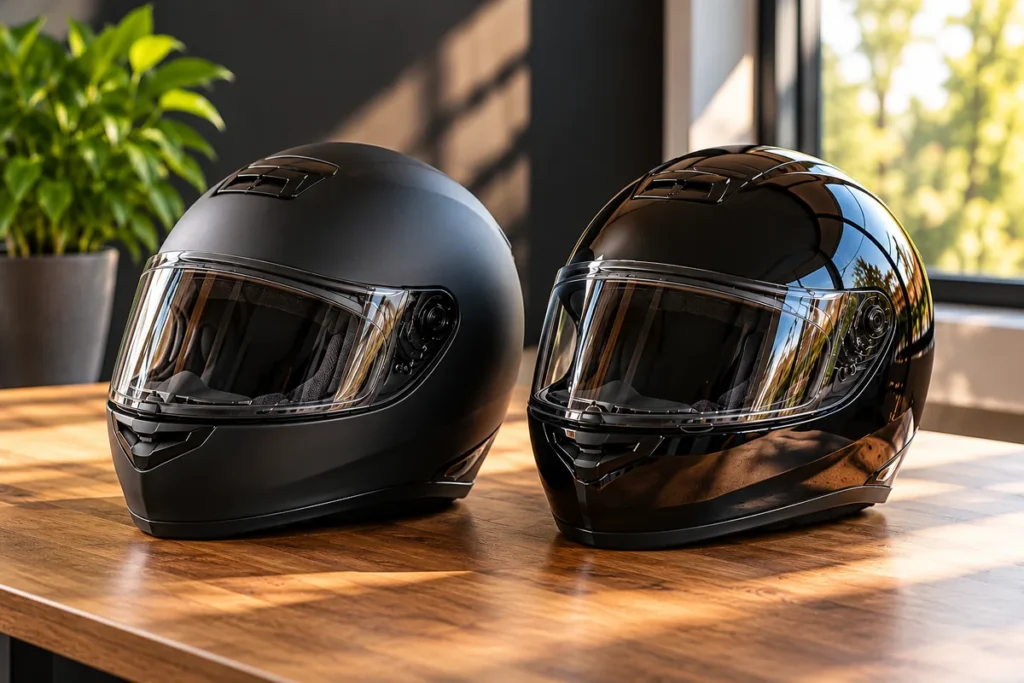
Matte Black Helmets
Matte black has a muted appearance. It can look particularly good if you prefer simple riding gear without bright graphics or a highly reflective finish.
Because the surface produces fewer sharp reflections, the shape of the helmet can appear more understated.
Gloss Black Helmets
Gloss black has a shinier appearance. Reflections make the curves and contours of the shell more noticeable.
Some riders prefer that polished look, especially when the motorcycle and other riding equipment also have glossy surfaces.
Neither finish is automatically more stylish. The better choice is the one you still like after seeing it in normal daylight, not just under showroom lighting.
Which Is Easier to Clean: Matte or Gloss?
This is one of the more practical differences.
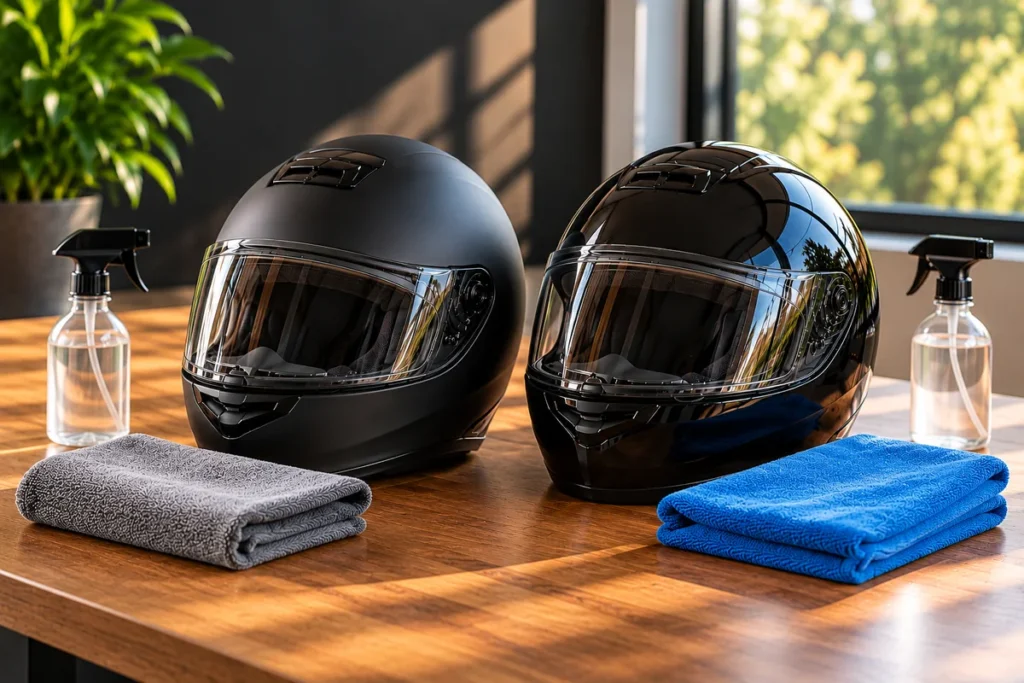
Cleaning a Matte Helmet
A matte finish should be cleaned gently.
SHOEI recommends a soft cloth with water-diluted neutral detergent for its matte painted helmets. It also warns against hard rubbing, abrasives, wax, and unsuitable chemical products.
The reason is simple: aggressive cleaning can change the surface’s appearance, sometimes leaving a shiny area where the original finish was matte.
For detailed instructions, see my guide on how to clean a matte black helmet.
Cleaning a Gloss Helmet
A gloss finish may be more forgiving when it comes to cosmetic cleaning and polishing, but the manufacturer’s instructions still matter.
Do not assume that a product suitable for the painted shell is also safe for the visor, vents, rubber seals, or plastic components.
Arai’s care guidance, for example, recommends warm water and a microfiber cloth for cleaning its face shields and warns about chemical exposure.
If easy maintenance is your main concern, a gloss finish may be more convenient. But either finish can be kept clean with regular, gentle care.
Which Finish Shows Scratches More Easily?
Both matte and gloss helmets can develop visible marks.
The difference is how those marks appear and whether the finish can be restored.
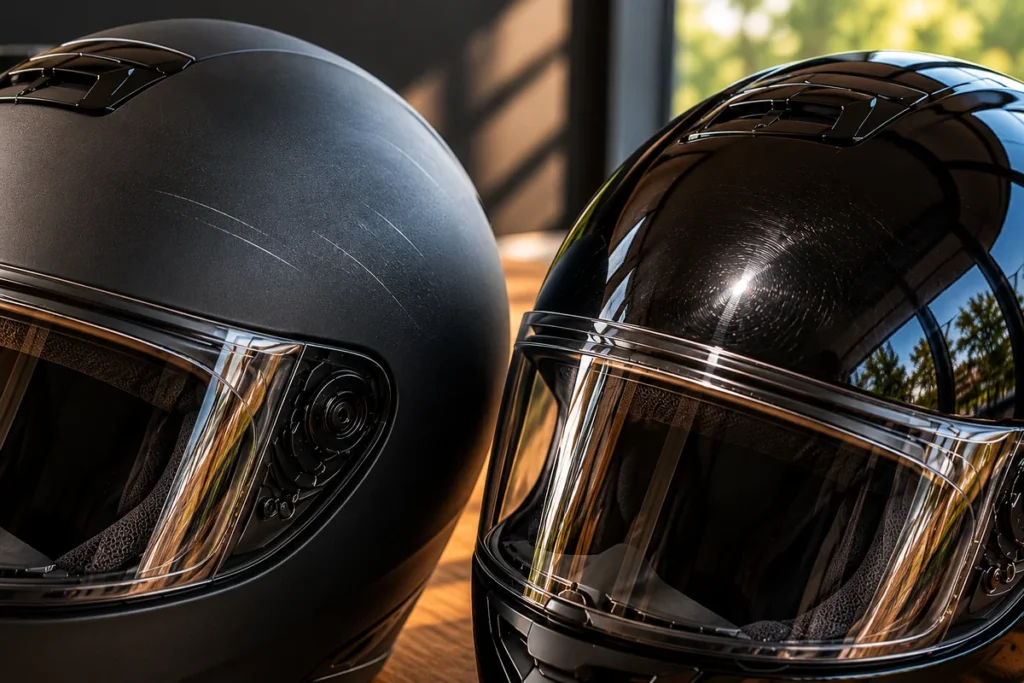
Scratches on Matte Helmets
On a matte surface, rubbing or abrasion may create a patch that looks shinier than the surrounding paint.
This can be particularly noticeable on a black helmet because the changed area reflects light differently.
Trying to polish out the mark may make the uneven appearance worse.
SHOEI specifically cautions against abrasives and polishing products on matte paintwork.
Got scratches on your matte helmet? I’ve covered how to fix scratches on a matte black helmet in a separate guide, along with a few things worth avoiding.
Scratches on Gloss Helmets
Glossy surfaces can show fine scratches, swirl marks, and scuffs, especially under strong lighting.
Some superficial cosmetic marks on certain glossy coatings may be treatable using manufacturer-approved methods.
However, that doesn’t mean every scratch can be polished away safely.
A scratch that reaches the shell, a crack, or damage following an impact should not be treated as a simple paint problem.
If you’re unsure whether the helmet is damaged, stop using it until the manufacturer or an appropriately qualified specialist can advise you.
The takeaway: Matte finishes can be difficult to restore once their texture or sheen changes. Gloss finishes may allow more cosmetic correction, but neither finish is scratch-proof.
Does Matte or Gloss Affect Helmet Safety?
A matte finish is not inherently safer than a gloss finish, and a gloss finish is not inherently more protective than a matte one.
The exterior appearance alone does not establish a helmet’s impact protection.
When comparing two helmets, pay attention to:
- The safety certification applicable where you ride
- The helmet’s fit and retention system
- The manufacturer’s construction and design
- The condition and age of the helmet
- The visibility and condition of the visor
A properly fitting, appropriately certified helmet matters far more than whether its paint is matte or glossy.
The helmet’s age and condition matter too. If you’re unsure when yours should be replaced, I’ve covered that in my guide on how long motorcycle helmets last.
What About Visibility on the Road?
There is another distinction worth making: a helmet’s finish is not the same thing as its overall visibility.
A glossy black helmet can reflect some light more clearly than a matte black helmet, but both are still predominantly black.
Do not rely on the gloss finish to make a black helmet highly conspicuous to other road users.
If visibility is a major concern, consider lighter or fluorescent colors and appropriate reflective elements, subject to the helmet manufacturer’s instructions.
Does a Matte Black Helmet Get Hotter Than a Gloss Black Helmet?
There isn’t enough basis to say that one black helmet will consistently feel hotter solely because it has a matte or gloss finish.
Temperature depends on several factors, including sunlight, shell construction, insulation, ventilation, speed, and ambient conditions.
A black exterior can absorb solar energy, but that doesn’t establish a meaningful comfort difference between two helmets based only on their surface sheen.
If you’re choosing a helmet for hot-weather riding, I would pay more attention to fit, ventilation design, and the manufacturer’s specifications than to matte versus gloss.
For a closer look at helmet color and summer heat, see my guide on whether black motorcycle helmets get hotter.
Which Finish Is Better for Everyday Riding?
Think about how you use and maintain your gear.
Choose Matte If:
- You prefer a low-sheen, understated appearance.
- You like the look of matte black with your motorcycle and riding gear.
- You’re comfortable following finish-specific cleaning instructions.
- You accept that shiny scuffs and stains may be difficult to correct.
Choose Gloss If:
- You prefer a shiny, reflective appearance.
- You want a finish that may allow more cosmetic maintenance options.
- You don’t mind seeing reflections or fine swirl marks.
- You prefer the appearance of polished black paint.
Neither option is universally better.
I would first choose a helmet that fits correctly, meets the appropriate safety requirements, and has the features I need. Then I would decide which finish I prefer.
Matte vs Gloss Helmet: Frequently Asked Questions
Is Matte Better Than Gloss for a Motorcycle Helmet?
Not necessarily. Matte and gloss finishes mainly differ in appearance and maintenance. The better option depends on your preferences and the specific helmet.
Are Matte Helmets Harder to Clean?
They can require more careful cleaning. Some manufacturers warn that rubbing, polishing, and unsuitable products may alter matte paintwork.
Do Matte Helmets Scratch More Easily?
It depends on the coating and how the helmet is handled. Matte finishes can show scuffs or shiny patches that are difficult to correct, while glossy finishes can show fine scratches and swirl marks.
Can You Wax a Matte Black Helmet?
Generally, you should avoid waxing matte paintwork unless the helmet manufacturer specifically approves the product. SHOEI advises against wax and polishing compounds on its matte painted helmets.
Is a Gloss Black Helmet Safer Than a Matte Black Helmet?
No safety advantage can be established from the finish alone. Look at certification, fit, construction, and the helmet’s condition.
Which Finish Is Better for a Beginner?
Either can work. A beginner should prioritize fit, certification, comfort, and ease of use. The finish is a secondary preference. Before buying, check my motorcycle helmet size chart to learn how to measure your head and compare sizes across brands.
Final Verdict: Matte or Gloss?
If you’re choosing between a matte and a gloss motorcycle helmet, don’t let the finish distract you from the helmet itself.
Matte black offers a subdued appearance, but its surface can require more careful handling. Gloss black provides a shiny look and may offer more options for cosmetic maintenance, depending on the manufacturer’s instructions.
For me, the deciding factors would be fit, certification, comfort, and features first. Once those are right, I would choose the finish I prefer and can maintain properly.
If you decide on matte black, my helmet cleaning guide explains how to care for the finish without using harsh cleaning methods.